28.04.2023
A problem as complex as climate change requires multifaceted solutions, and the transdisciplinary mission of the Rob and Melani Walton Center for Planetary Health at Arizona State University brings together several departments to create a holistic approach to climate research.

A problem as complex as climate change requires multifaceted solutions, and the transdisciplinary mission of the Rob and Melani Walton Center for Planetary Health at Arizona State University brings together several departments to create a holistic approach to climate research. This multi-pronged method inspired the design team to implement a broader interpretation of sustainable design for the new building to include elements of regeneration, livability, wellbeing, and placemaking. The result is a leading-edge climate change research facility that is reflective of the complicated climate issues that the Center aims to solve.
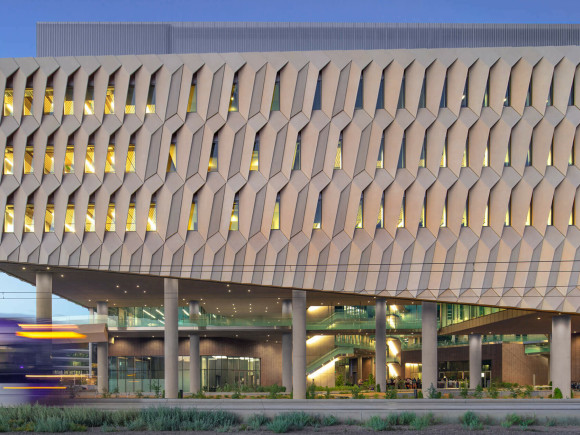
Grimshaw, in partnership with Architekton, envisioned the Walton Center for Planetary Health as an intricately designed building that is deft in its response to the site history, the opportunities present in the natural environment, and the needs of the community. The resulting design breaks open the model of a typical academic research facility to offer a sense of community, movement, and progress through a human-centric design.

Centrally located on the ASU campus, the Center serves as an urban node, drawing in people from every direction through a light rail station, pedestrian bridge, major campus throughfares, and a pedestrian network of sidewalks and bike paths. The building is grounded by an open-air courtyard that ties it to the existing building typology on campus and offers a central gathering place for events. Much of the building volume is lifted off the ground to celebrate the ancient canal built by the indigenous Hohokam people. The design engages the waterway to honor the history of the site while also irrigating native plants and cooling the microclimate under the building.

A “slot canyon” penetrating from the east allows for a prevailing breeze through the courtyard, creating an ideal environment for gatherings and events. An ephemeral shade structure on the roof straddles the line between open and covered, allowing for both the growth of native plants and a shield from the sun. With a courtyard that is adaptable to various weather extremes, key social spaces can tumble into the outdoors, creating year-round movement through the center of the building. The glistening glass interior of the courtyard, inspired by the blue-green water of the Grand Canyon’s Havasu Falls, offers sightlines and light penetration through the building, while the external staircases activate the outdoor space.
The human-centric design of the Walton Center for Planetary Health establishes a sense of place that draws in the ASU community through its ecologically responsive design principals. Unique problems require unique solutions, and the design elements of livability, connectivity, and sustainability converge in a single building to enable the transdisciplinary research needed to understand and improve our relationship with the world.


←